
Risk management software for forward-looking action
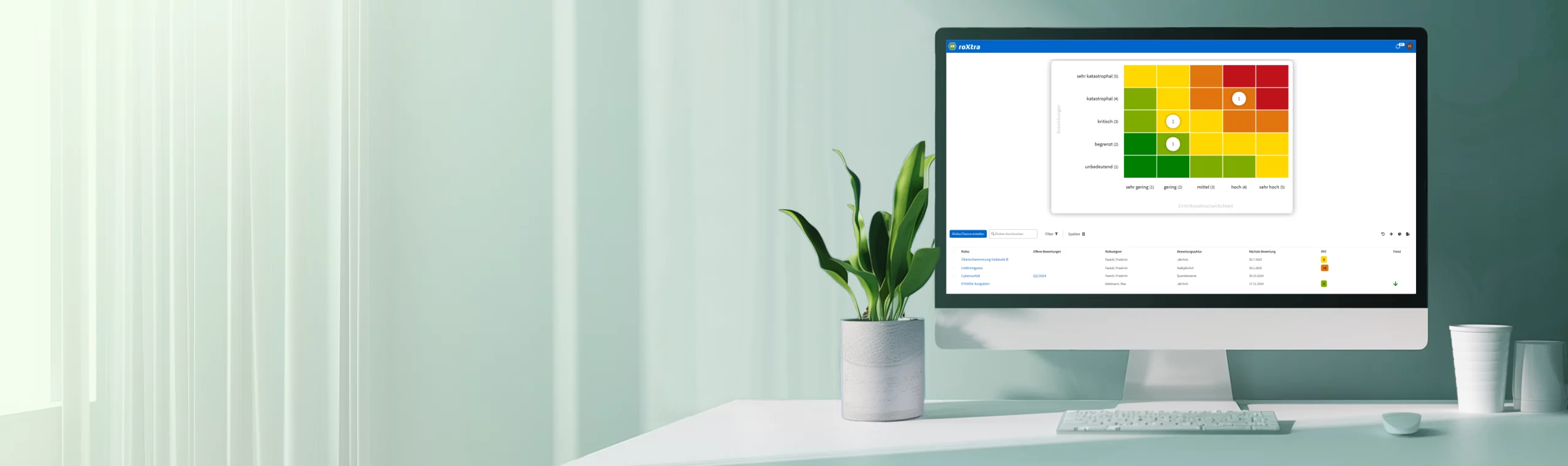
The risk management software for forward-looking action
Risk management software for forward-looking action
Why roXtra Risks?
Efficient risk identification
Fast recording and evaluation
Individual customization
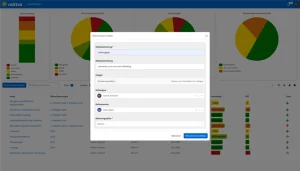
Flexibly define risk categories and valuation cycles
Clear control
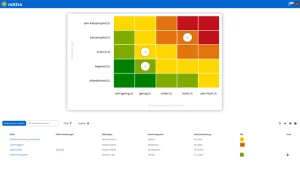
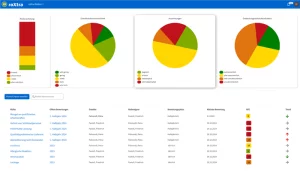
Matrices and risk reports for comprehensive reporting
Rapid integration of measures
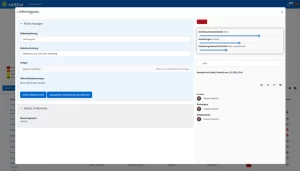
Derive and link measures directly
Get advice now
Get to know roXtra in a non-binding and free online presentation.
Get advice now
Get to know roXtra in a non-binding and free online presentation.
Practical applications for roXtra Risks

Occupational safety
Compliance

Data protection

FMEA & HACCP

IT security

Medical risks

Product risks

Process & project risks

Technical risks

Environmental risks
Optimize your risk management with roXtra
It is true that ISO 9001:2015 does not require companies to have an explicit risk management system, as ISO 31000 does, for example. Nevertheless, companies certified in accordance with the 9001 standard are obliged to consider opportunities and risks as part of the quality management system (QMS).
Opportunities and risks can have an impact on the achievement of quality objectives and the performance of the QMS. The risk-based approach is intended to help minimize negative effects (risks) and maximize positive effects (opportunities).
Risk analysis software such as roXtra Risks can be an efficient risk management tool that simplifies controlling.
Safely meet regulatory requirements
roXtra supports you in complying with complex regulatory requirements. The software modules can be used to create an integrated management system (IMS). By linking risks, measures and processes, you always have an overview and can ensure your compliance in the long term.
Whether ISO certifications, data protection guidelines or industry-specific standards - roXtra helps you to implement regulations efficiently and prepare optimally for audits. With flexible customization options and clear controlling, your organization remains capable of acting at all times.




Further information on risk management with roXtra

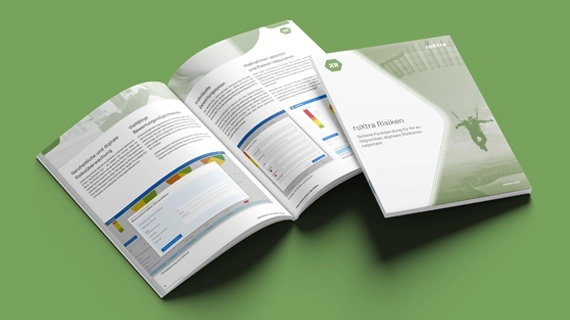
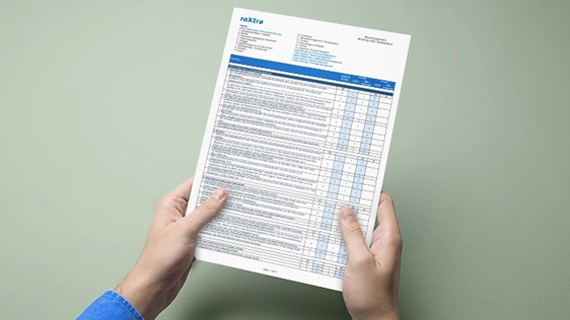

Risk management made easy with roXtra
What is part of risk management?
Risk management encompasses the measurement, analysis, evaluation, monitoring and control of company-wide risks. It accompanies the entire risk life cycle - from the identification of potential threats to the implementation of countermeasures and emergency plans.
The aim: to identify and exploit risks in good time. Risk management serves as an early warning system that makes dangers visible, develops measures to limit them and at the same time identifies opportunities that can contribute to optimization.
Risk management is a dynamic process: in order to effectively prevent risks and fulfill legal requirements such as early risk detection, risk management is divided into various sub-processes. This enables companies to control threats, meet legal requirements and secure long-term competitive advantages.
The central tasks of management can be divided into seven steps:
- Identify risks
- Assess risks
- Develop strategies
- Define measures
- Implement measures
- Check effects
- Monitor risks
With this structured approach, companies keep risks under control and can react flexibly to changes.
What are the advantages of risk management software?
Companies face a variety of risks every day - from economic losses to legal challenges. Without a structured approach, these can quickly lead to serious problems.
A digital risk management solution offers decisive advantages here:
- Transparent risk overview: Risks are recorded, evaluated and prioritized centrally, creating a sound basis for decision-making.
- Automatic resubmission: Important deadlines and measures are reliably monitored and submitted in good time for processing.
- Efficient collaboration: teams can work together on complex risks and measures, with tasks clearly assigned.
- Audit-proof documentation: All changes, decisions and measures are recorded in a traceable manner.
- Adherence to compliance requirements: Legal requirements and standards are automatically taken into account and adhered to.
- Risk prioritization: The most important risks can be identified at a glance thanks to color coding.
- Dynamic reporting: Risk analyses and reports can be created and updated in real time.
What standards and regulations govern risk management?
The following standards address risk management systems:
ISO 9001: As a "foundational" standard for quality management, it contains integrated requirements that embed risk management into the optimization of business processes.
ISO 14971: A central standard for risk management in medical technology that ensures the safety of medical devices.
DIN EN 15224: Based on ISO 9001, but specific to the European healthcare sector, the standard combines quality management with the requirements for risk management in medical contexts.
ISO 22301: Focuses on business continuity management (BCM) and helps companies to prepare for and minimize risks such as disruptions.
ISO 27005: As part of the standard for information security management systems (ISO 27001), this standard offers a specific approach to risk management in the area of information security.
ISO 31000: This standard provides general principles and guidelines that are suitable for all industries to systematically manage risks.
ISO 45001: As an international standard, it describes requirements for occupational health and safety in order to minimize risks in the workplace.
DIN EN IEC 80001-1: This standard deals with risk management for IT network integration containing medical devices, which is particularly important in the healthcare sector.
How do you set up a risk management system (with software)?
The following questions provide a brief guide to setting up a risk management system (RMS) that can be tailored to a company’s specific needs and requirements:
1. planning and framework conditions
What goals should be achieved with the RMS? Which areas and risks should be covered?
2. organizational structure
How are responsibilities organized? How can the RMS be integrated into existing structures?
3. risk identification, categorization and assessment
Have all risks been recorded, categorized and evaluated, for example using the risk priority number?
4. control and measures
What are the risk strategies and measures? Are there contingency plans for critical risks?
5. integration
What indicators point to the successful integration of risk management in the company?
6. monitoring and reporting
Does the risk monitoring provide the information required by stakeholders? Is the RMS effective?
8. continuous improvement
Can the RMS be adapted using the PDCA cycle?
Do you already know our other solutions?
roXtra Documents
Manage documents according to standards and in individual workflows.


We will show you roXtra in a free and non-binding online presentation.